Dynamic Websites

E-Commerce websites
Search Engine Optimisation
Social Media Marketing
Static Websites
Google Ads Management
Lead Generation
Digital Branding
Creative Services
Videography
Graphic Design
UI/UX Design
Network Infrastructure
IT Hardware and IT Business Solutions
IT AMC
Every campaign starts with clearly defined objectives, so your budget is directed toward a specific, measurable outcome from the first dirham spent, rather than optimised after the fact for a goal that was never clearly set.

You know exactly what you’re paying for and what it covers before a campaign begins, with no unexplained charges appearing partway through.
One point of contact throughout your campaign, rather than a rotating support queue that has you re-explaining your business every time you have a question.
Decisions are made from your actual campaign results rather than generic industry assumptions that may not reflect your specific market or audience.
Strong creative and measurable strategies are developed together by the same team, rather than treated as two disconnected disciplines that don’t quite align by the time a campaign goes live.
Instagram advertising can work alongside SEO, Google Ads, PPC Marketing, website development, landing pages, lead generation, and social media marketing, so your campaigns strengthen the rest of your marketing rather than sitting apart from it.
AI supports our analysis, research, and testing, but every strategic decision remains led by people who understand your business and your market — not left to automation alone.
Campaigns are shaped by real familiarity with Dubai audiences, local competition, and UAE customer behaviour, rather than a generic international approach applied regardless of where your customers actually are.
Kkonect Us Agency manages Instagram advertising campaigns for businesses across Dubai and the UAE, built around one goal: turning paid social attention into qualified leads, sales, and bookings your business can actually measure.
Whether you’re targeting customers in a specific area of Dubai, launching a new product, or trying to build a consistent pipeline of enquiries for a service business, our team plans, builds, and manages Instagram campaigns designed around your objective — not a generic template applied to every client.
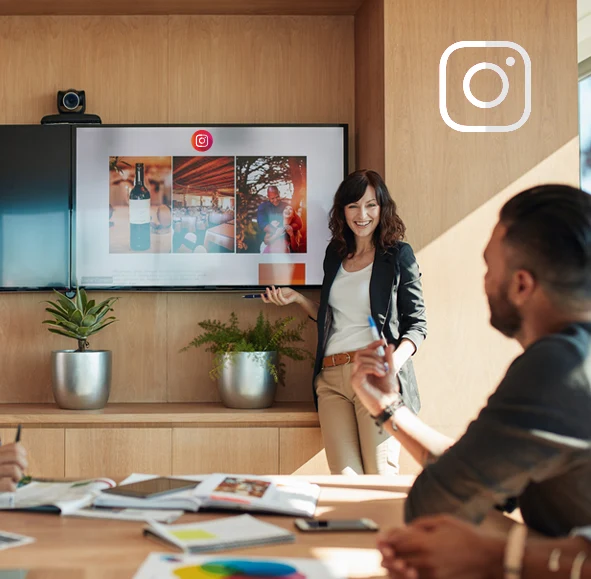
Organic Instagram marketing depends almost entirely on your existing audience, how well individual content performs, and how the platform chooses to distribute it. That makes it valuable for building a relationship with people who already follow you, but limited when the goal is reaching people who don’t yet know your business exists.
Paid Instagram advertising works differently. It allows controlled targeting based on location, interests, and behaviour, with a defined budget you set and manage directly. Campaigns reach audiences beyond your existing followers, provide measurable data on exactly what’s happening after someone sees your ad, and can be built around a specific business objective — leads, sales, bookings, or awareness — rather than general engagement.
This is precisely where professional management makes a practical difference. Structuring a campaign around the right objective, targeting it properly, and reading the resulting data takes a different skill set than writing a good caption. Managed well, Instagram advertising becomes a genuine, trackable growth channel rather than another item on your content calendar.
Instagram advertising is paid content shown across feeds, Stories, Reels, and Explore, placed in front of a specifically targeted audience rather than left to organic reach and algorithm luck.
Targeting can be built around demographics such as age and location, interests and behaviours based on what people already engage with, and more precise options including custom audiences built from your own website visitors or customer lists. Lookalike audiences extend this further, finding new people who share characteristics with your best existing customers — effectively multiplying the value of the customer data you already have.
It’s worth understanding one important detail: Instagram advertising runs through Meta’s advertising system, the same infrastructure that powers Facebook Ads. Instagram isn’t a separate platform sitting on its own; it’s one of several placements available within a unified Meta Ads account. That’s why campaigns often perform more efficiently when structured across both Instagram and Facebook together, drawing from a single shared audience and budget rather than running two disconnected efforts.
Different formats suit different objectives, and using the wrong one for your goal is a common reason campaigns underperform.
Image ads are a single static image with supporting copy. They fit best when your message is simple and visual — a product, an offer, or a clean brand statement — and they’re quick to produce and easy for a viewer to process in a single glance. They support awareness and straightforward promotion.
Video ads give you room to demonstrate a product in use or tell a brand story that’s harder to convey through a static image. They sit well in feed placements and support consideration, particularly for offerings that benefit from being seen rather than just described.
Carousel ads let a viewer swipe through several images or videos within one ad unit. They’re useful for showcasing a product range or walking through a few key features without needing separate ads for each, supporting both discovery and consideration.
Stories ads appear full-screen between organic Stories content. They suit time-sensitive offers or more immersive, behind-the-scenes storytelling, and tend to support awareness- and urgency-driven action.


Reels ads sit within Instagram’s discovery-focused feed, making this one of the stronger formats for reaching people who’ve never encountered your brand before, particularly when the content feels authentic rather than heavily produced. This format supports awareness and discovery.
Shopping and product ads pull directly from your product catalogue, showing pricing and details before the click. For e-commerce businesses, this shortens the distance between discovery and purchase and supports direct sales objectives.
Lead ads let someone submit their details without leaving Instagram, removing a common point of drop-off. This format supports lead generation, particularly for service businesses focused on enquiry volume.
Retargeting ads are shown specifically to people who’ve already engaged with your website, app, or Instagram content. Because that audience has already shown interest, this format typically supports conversion at a lower cost than reaching new audiences.
Targeting precision is where Instagram advertising delivers most of its value. Demographic and geographic targeting narrow your audience by age, location, and similar core details. For a Dubai business, this might mean focusing on a specific neighbourhood or service radius rather than the entire emirate, so the budget reaches people who can genuinely become customers.
Interest and behavioural targeting go further, reaching people based on what they already engage with and how they act online. Layered on top, custom audiences let you specifically target people who’ve already interacted with your business, while lookalike audiences extend your reach to new people who resemble your best existing customers.
The right approach depends on your specific situation: your industry, how large your realistic audience is, your campaign objective, how long your typical sales cycle runs, and how much customer data you already have to build from. A real estate business targeting one Dubai neighbourhood needs a very different setup from an e-commerce brand selling across the UAE. That’s exactly why targeting strategy is built individually for each account rather than applied as a fixed template.
Every campaign we build is structured around a specific business outcome. Here’s what a properly managed Instagram advertising campaign can work toward for your business.
Expand your reach beyond your existing followers. Paid campaigns put your business in front of entirely new, relevant audiences who've never encountered your brand organically.
Turn engagement into qualified leads. Targeted campaigns paired with conversion-focused creative are built to move people from noticing your ad to actually reaching out.
Drive traffic that's worth having. Send high-intent audiences directly to the pages built to convert them, rather than waiting for organic followers to click through on their own schedule.
Grow e-commerce revenue directly. Promote specific products and offers to shoppers most likely to buy, using formats built for conversion rather than general awareness.
Fill your calendar. Service, hospitality, and real estate businesses can use campaigns specifically to drive appointments, reservations, and viewings.
Recover interest you'd otherwise lose. Reconnect with people who've already visited your website or engaged with your content but didn't take the next step.
Stay in control of your spending. Set your budget, adjust it whenever you need to, and scale what's working — a level of flexibility few other channels offer.
See what your investment is generating. Track impressions, reach, clicks, cost per result, leads, conversions, and ROAS, giving you evidence rather than guesswork.
Each campaign is measured against the objective it was actually built for, so you have a clear picture of what your investment is producing rather than activity metrics disconnected from real business value.
We start with audience research, objective setting, and funnel planning, so your campaign strategy is built around what your business actually needs to achieve. This matters because a campaign built on a template rarely accounts for your specific sales cycle or customer behaviour.
Objectives, audiences, placements, and conversion tracking are structured correctly before your budget starts spending. Getting this right from day one avoids the common problem of discovering tracking gaps only after a campaign has already been running.
Concepts, image and video direction, ad copy, and calls-to-action are developed specifically for how each format performs on the platform, rather than repurposed content that doesn’t fit. This matters because creative built for another channel rarely performs the same way here.
Live campaigns are monitored and adjusted regularly rather than left to run unattended after launch, catching underperformance early instead of discovering it in a monthly report.
Custom, lookalike, demographic, interest, and behavioural audiences are built to match your specific objective and whatever customer data you already have, rather than a single broad audience applied to every campaign.
Structured campaigns reconnect with previous website visitors and people who’ve engaged with your content, recovering interest that would otherwise be lost entirely.
Built specifically around capturing qualified prospects, using native lead formats where they make sense for your business. This works alongside our broader Lead Generation services in Dubai for businesses managing enquiries across multiple channels.
Product-focused campaigns using shopping formats designed specifically to move a shopper from browsing to purchase, not just to generate impressions.
Creative, headlines, messaging, audiences, placements, and calls-to-action are tested against each other, and decisions are made based on what the results show rather than assumptions.
Full tracking ties every result back to its exact campaign and ad, so the data behind your reporting is accurate rather than estimated.
Regular performance reporting alongside clear recommendations, so you know what’s working and what’s changing next, rather than waiting to ask.
We begin by understanding your business, audience, competitors, offer, and customer journey. This groundwork shapes every decision that follows. Skipping it is how campaigns end up targeting the wrong audience with the wrong message.
Target audiences, funnel stages, objectives, budget allocation, and placements are defined based on what we've learned, giving your campaign a deliberate structure rather than a rough starting point that gets corrected later at your expense.
Visual concepts, ad copy, video, Reels, Stories, and carousel content are developed specifically for the formats identified as the right fit for your goals — not a single asset stretched across every placement.
Campaigns, tracking, audiences, and conversion events are configured and launched together, so every result is measurable from the first day rather than backfilled after the fact.
Creative, targeting, placements, messaging, and budgets are tested against each other, with decisions made from what the data actually shows rather than what seems likely to work.
CTR, cost per click, cost per lead, cost per acquisition, conversions, and ROAS are tracked on an ongoing basis, not reviewed only once a campaign has already ended.
Budget shifts toward what's proven to perform, spending is reduced on what isn't, and you receive clear, regular reporting throughout the process rather than a single summary at the end.
Instagram advertising performs at its best when it isn’t working alone. It’s particularly effective at creating demand and building attention, putting your brand in front of people before they’re actively searching for what you offer. Other channels are better suited to capturing that intent once it exists and converting it into an actual sale.
Paired with Google Ads and wider PPC Marketing, Instagram builds awareness while search campaigns capture people already actively looking to buy. These are two different stages of the same customer journey, working together rather than competing for the same budget. Strong SEO and Social Media Marketing build the organic foundation that paid Instagram campaigns can amplify, while a well-optimised website and dedicated landing pages make sure the traffic Instagram sends actually converts once it arrives.
Where lead capture is the priority, Instagram campaigns connect directly into our broader Lead Generation approach. Remarketing then ties these channels together, re-engaging visitors who’ve interacted with your brand across any of them, not just Instagram in isolation.
We don’t treat Instagram advertising as a standalone product. It’s built as one connected part of your wider digital strategy, reinforcing the channels already working for your business.
Whether your goal is more leads, e-commerce sales, bookings, website traffic, brand awareness, or recovering visitors through remarketing, we’ll build an Instagram advertising strategy around your specific business objective rather than a generic campaign template.
We manage the full range — image ads, video ads, carousel ads, Stories, Reels, shopping and product ads, lead ads, and retargeting campaigns. The right format depends on your objective. Reels and Stories tend to suit reaching new audiences, while lead ads and retargeting are usually stronger for direct conversion. Rather than defaulting to a single format, we recommend a mix based on what you’re actually trying to achieve.
Costs vary depending on your industry, audience size, competition, and campaign objective, since certain sectors and audiences simply cost more to reach than others. Our management fee and your ad spend budget are calculated separately, and we’ll recommend a realistic starting budget once we understand your goals and market.
Targeting runs through Meta’s advertising system, using demographics, interests, behaviours, and location, alongside more precise options like custom audiences built from your existing customer data and lookalike audiences that find new people similar to your best customers. Which combination makes sense depends on your industry and how much customer data you already have.
Not at all. Paid campaigns are shown to a defined target audience regardless of your current follower count, which makes advertising accessible even for businesses just starting to build their Instagram presence.
Campaigns can begin generating data shortly after launch, while meaningful optimisation typically requires enough conversion data to identify what’s actually working. This timeline varies depending on your budget, industry, and how quickly your specific audience responds.
Performance is measured against whatever objective was set for that specific campaign — commonly leads, cost per lead, website traffic, purchases, or ROAS — using proper tracking configured before launch. We report on what genuinely matters to your business, not just surface-level engagement numbers.
They can. Lead ads let people submit their details without leaving Instagram, which works well for service businesses focused on enquiry volume. Combined with the right targeting and prompt follow-up, Instagram can become a reliable lead source over time.
It’s well suited to it. Shopping and product ads pull directly from your catalogue and show pricing before the click, shortening the path from discovery to purchase. Paired with retargeting for browsers and cart abandoners, Instagram can become a meaningful revenue channel for e-commerce brands.
Retargeting shows ads specifically to people who’ve already interacted with your website, app, or Instagram content but haven’t yet converted. Because that audience already knows your brand, this is usually one of the more cost-effective campaign types available.
Organic marketing relies on posting content that reaches your existing followers, with visibility shaped by the algorithm and how engaged your audience already is. Advertising is paid and targeted, reaching a specifically defined audience regardless of follower count — a controllable, scalable channel rather than one dependent on algorithm distribution.
Looking for a digital marketing agency that focuses on real business growth, qualified leads, and measurable results? Kkonect Us Agency helps businesses strengthen their online presence, reach the right audience, and turn digital opportunities into growth. Get in touch with us today to build a smarter digital marketing strategy for your business.

IT Infrastructure
IT Infrastructure Setup & Amc
CCTV & Security Systems
Access Control & Entrance Security
Telecom & Intercom Systems
Automation – Cooperate Offices , Home & Hotel
Audio-Visual & Display Solutions
Looking for a digital marketing agency that focuses on real business growth, qualified leads, and measurable results? Kkonect Us Agency helps businesses strengthen their online presence, reach the right audience, and turn digital opportunities into growth. Get in touch with us today to build a smarter digital marketing strategy for your business.
IT Infrastructure
IT Infrastructure Setup & Amc
CCTV & Security Systems
Access Control & Entrance Security
Telecom & Intercom Systems
Automation – Smart Building, Office, Home & Hotel
Audio-Visual & Display Solutions
Copyright © 2026 All Rights Reserved.
Website Design & Development | Static | Dynamic | E-Commerce | Shopify and woocommerce | Landing Page | Website Revamp | AMC
Digital Marketing | SEO | SMM | PPC | Google Ads | Lead Generation | Social Media Advertising | Instagram | Facebook
Creative services | Graphic Design | UI / UX | Photography | Videography |
IT solutions | Network Infrastructure | IT AMC | IT Hardware & Business IT Solutions
Copyright © 2026 All Rights Reserved.